
PORT GUIDE
Trieste cruise port guide: what to see, do and eat
Trieste has quietly become one of the Adriatic's most rewarding cruise ports. As Venice turned large ships away, many moved here, and passengers found a handsome Habsburg city of grand cafés and sea-facing squares, with the terminal just across the road.
Destination Traveller editors · 6 min read · 20 November 2026
- Friuli Venezia Giulia
- Italy
The short answer
Walk everywhere. Stroll the Molo Audace at sunset, take coffee in a historic café on Piazza Unità d'Italia, climb San Giusto hill for the cathedral and castle, and save the afternoon for Miramare Castle on its headland. If Trieste is where your cruise starts, give it a night or two: it is one of Italy's most underrated cities.
Where ships dock
Ships berth at the Stazione Marittima on the city's waterfront, opposite the centre. Turn one way for the yacht marina; turn the other for the old port warehouses of Porto Vecchio, being restored as a new cultural district. The railway station is about 15 minutes on foot.
Getting into town
There is nothing to arrange: cross the road. The centre is compact and mostly flat by the sea, rising steeply towards San Giusto. Buses and taxis cover the outlying sights.
A day ashore
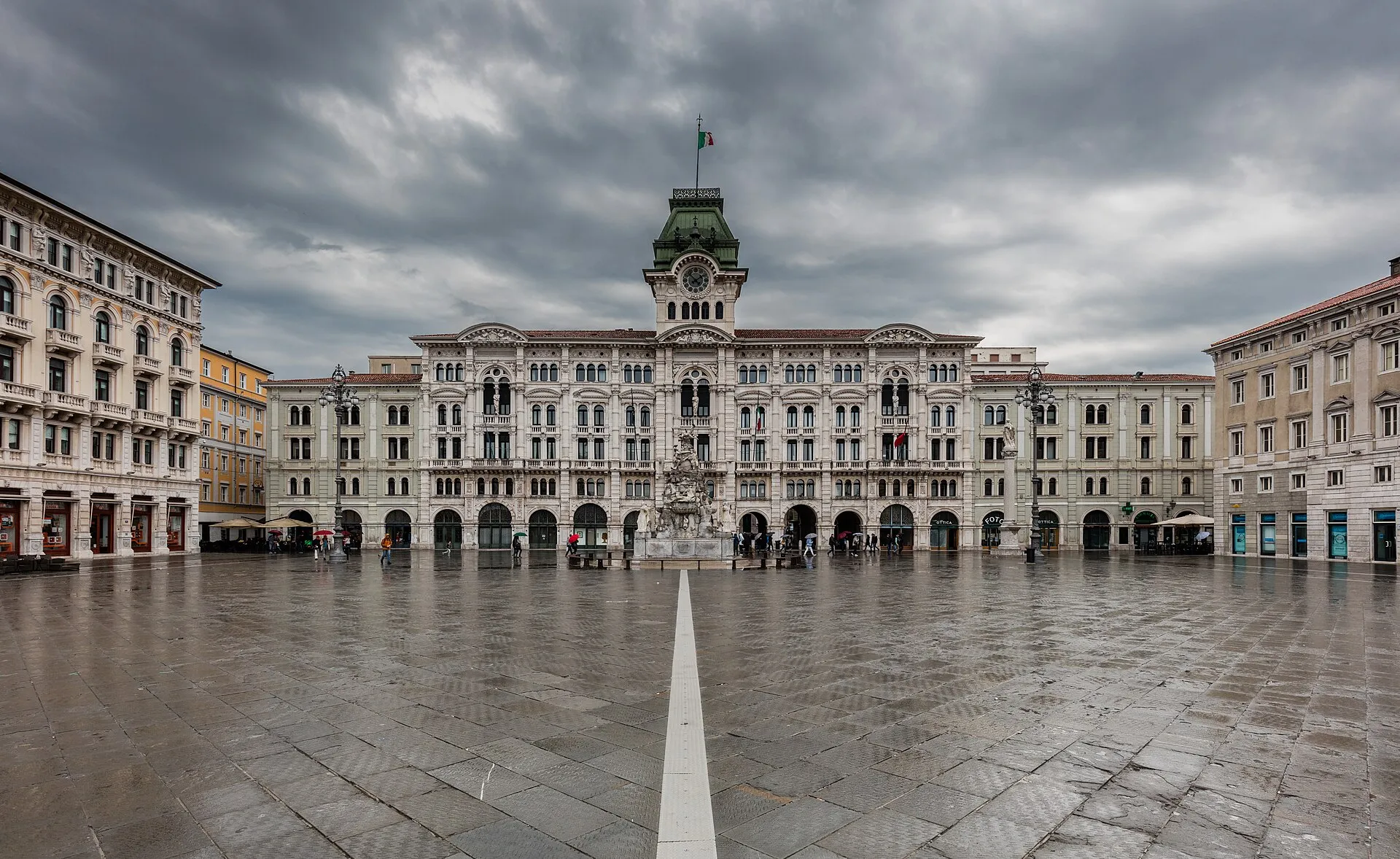
Piazza Unità d'Italia. Said to be Europe's largest square facing the sea, lined with grand Habsburg-era palaces including the town hall. It is at its best in the evening light.
Molo Audace. This stone pier, built over the wreck of an 18th-century ship, reaches out into the gulf and is the city's favourite place for a walk at dusk, with a fine view back to your ship.
San Giusto. Climb to the hilltop cathedral, with its Byzantine mosaics, and the castle next door, passing a Roman theatre on the way up.
Historic cafés. Trieste is Italy's coffee capital, and its literary cafés were the haunts of James Joyce, Italo Svevo and Umberto Saba. Order a "capo in b", a small macchiato served in a glass, as the locals do.
Miramare Castle. The white castle built for Archduke Maximilian of Austria sits on a promontory about 8km along the coast, with gardens running down to the sea. Take a bus, a taxi or, in summer, a boat.
Further afield
The Karst plateau above the city has limestone caves, including the vast Grotta Gigante, and osmize, farmhouse tavernas selling their own ham, cheese and wine. Slovenia is half an hour away; the coastal town of Piran makes an easy half-day.
Eating and drinking
Trieste's food reflects its Austrian, Slovene and Italian past. Try a buffet, a traditional tavern serving boiled pork with mustard and grated horseradish, alongside sardoni impanai (breaded sardines) and jota, a bean and sauerkraut soup. Local white wines from the Karst and Collio are excellent.
How to plan your day
Half a day. Cross to Piazza Unità d'Italia, walk out on the Molo Audace, then wander the Borgo Teresiano, the 18th-century grid of streets around the Grand Canal, and stop for a coffee in one of the historic cafés.
A full day. Start with the climb to San Giusto for the cathedral and castle, coming down past the Roman theatre. After lunch, take a bus or taxi along the coast to Miramare Castle and its gardens. Back in town, finish with an aperitivo by the canal.
Further afield. Ship's excursions run to the Grotta Gigante on the Karst plateau, to Slovenia's Postojna Cave and Lake Bled, and to Venice. Venice is a long day on a coach and best saved for a separate trip if you can.
Shore excursions or independent?
In Trieste itself there is no need for a tour: the terminal is in the centre and every major sight is walkable or a short bus ride away. Excursions make sense for Slovenia, Venice or the caves of the Karst, where distances and tight timings matter. If your cruise begins here, consider a hotel night so you can explore at leisure.
More to see
The Grand Canal. Not the Venetian one, but a short canal built by the Habsburgs to bring ships into the heart of the city, now lined with cafés and the Serbian Orthodox church of San Spiridione.
The Revoltella Museum. A 19th-century merchant's palace turned art gallery, with a rooftop terrace overlooking the gulf.
The James Joyce trail. Joyce lived in Trieste for more than a decade and wrote much of Dubliners and A Portrait of the Artist as a Young Man here. A bronze statue of him stands on a bridge over the Grand Canal, and plaques mark his homes around the city.
Risiera di San Sabba. A former rice-processing plant that became a Nazi concentration camp, now a sobering national monument and museum on the edge of the city.
The Scala dei Giganti and Opicina tram. A grand staircase climbs from the centre; above the city, the Napoleonica path on the Karst edge has sweeping views over the gulf.
Where to stay before or after a cruise
The streets around Piazza Unità and the Borgo Teresiano are the most convenient bases, close to the terminal and the station. Several grand hotels face the sea on the waterfront. For a quieter stay, the Karst villages above the city have small inns and agriturismi with views across the gulf.
Practical tips
Money. The euro. Cards are accepted almost everywhere.
Coffee. Order like a local: "nero" is an espresso, "capo" is a macchiato, and "capo in b" is a macchiato in a glass.
Getting around. Buses run along the coast to Miramare and Barcola, the city's seafront lido, where locals swim and sunbathe on the promenade.
Accessibility. The seafront and centre are flat; San Giusto involves steep streets and steps, but buses climb most of the way.
The catch
Trieste is famous for the bora, a cold north-easterly wind that can blow hard in winter. Getting there from the UK can take longer than Venice: weigh flight options before you book an embarkation from here.
When to go
Late spring and early autumn are warm and calm. Summer is lively but hot; winter brings the bora and some cancelled tender calls along the coast.
Questions
Is Trieste cruise port near the city centre?
Yes. The terminal faces the city across the waterfront road, and Piazza Unità d'Italia is a few minutes' walk away.
How do I get from Venice airport to Trieste cruise port?
By coach, in a little over two hours, or by train, in just under three. Trieste's own airport is closer, about half an hour by train, but has fewer direct UK flights.
Why do cruise ships go to Trieste instead of Venice?
Venice now bars large cruise ships from its historic centre, so many lines use Trieste as an alternative embarkation and call port for the northern Adriatic.
Is Trieste worth a visit?
Very much so. It is a handsome, uncrowded city of grand squares, historic cafés and seafront walks, with the cruise terminal right in the centre.
Can you visit Slovenia from Trieste?
Yes. The coastal town of Piran is under an hour away, and excursions run to Lake Bled, Ljubljana and the Postojna Cave.
What is the bora wind in Trieste?
A strong, cold north-easterly wind that sweeps down from the Karst plateau, mainly in winter. Gusts can be powerful enough to delay ships.
Last updated 20 November 2026
Read next
Speak to a specialist
Plan it with someone who has been

Iglu Cruise
Ocean and river cruise deals from every major line
- Ocean cruises
- River cruises
- Luxury cruise lines
See profile →

Bolsover Cruise Club
Cruise specialists with extra value on every booking
- Ocean cruises
- Ex-UK sailings
- Fly-cruises
See profile →

Abercrombie & Kent
Luxury travel and small-group journeys since 1962
- Safari
- Small-group journeys
- Private tailor-made travel
See profile →
The Sunday Postcard
One considered email each week: a trip, a hotel and a route worth your time.