
PORT GUIDE
Dubrovnik cruise port guide: what to see, do and eat
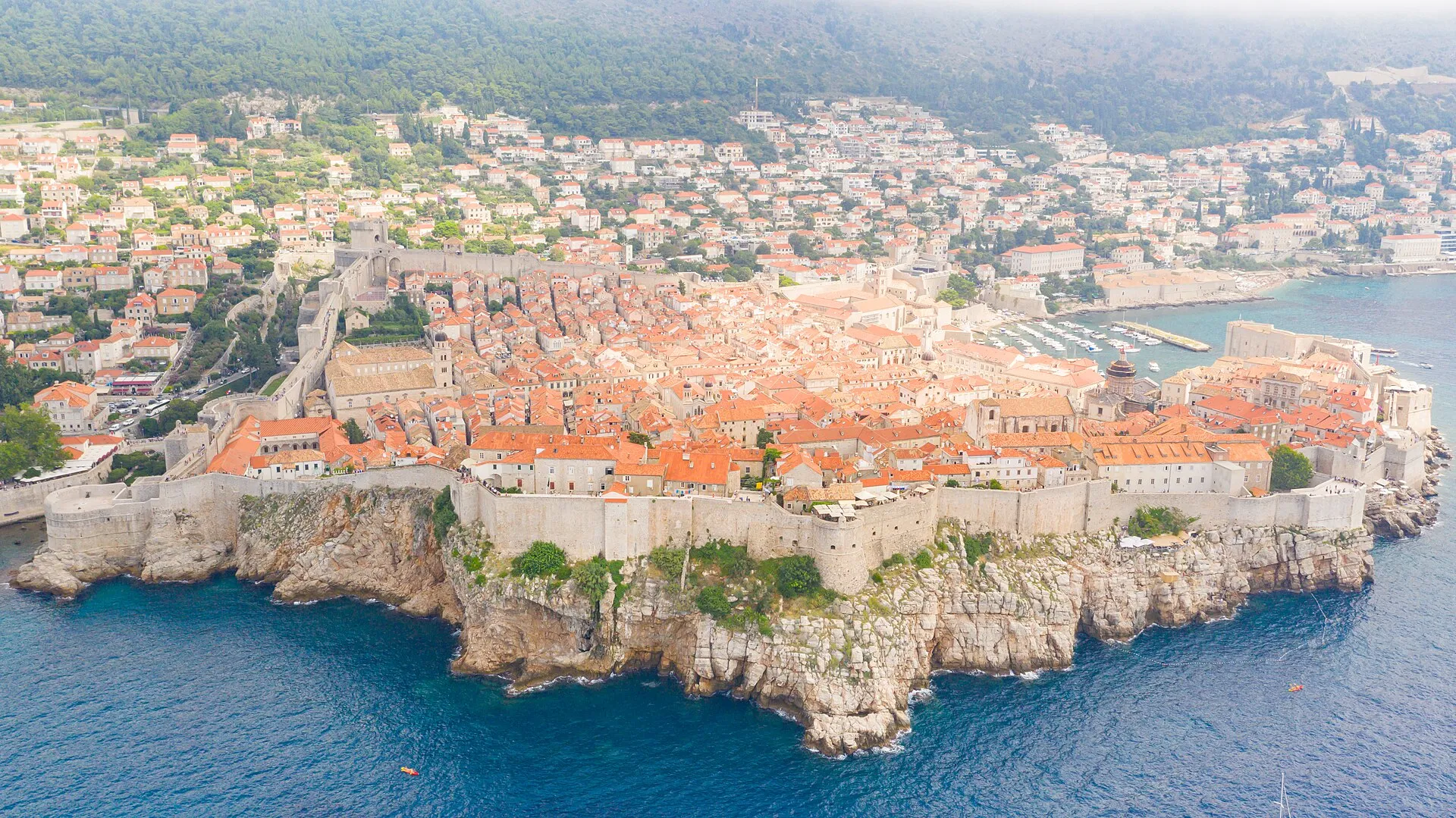
Dubrovnik's walled Old Town is the reason to come, and it is small enough to see properly in a day. The trick is timing: walk the walls early, leave the Stradun to the crowds at midday and find a quiet terrace on the sea side of the city.
Destination Traveller editors · 6 min read · 20 November 2026
- Dalmatia
- Croatia
The short answer
Go in early, do the walls first, then wander. Take the bus or a taxi from Gruž to Pile Gate, walk the walls while it is still cool, then explore the Stradun and the side streets, and take the cable car up Mount Srđ in the afternoon for the view back down over the roofs. Buy the one-day Dubrovnik Pass rather than a walls-only ticket: it costs the same and covers your bus fare.
Where ships dock
Port Gruž sits on a fjord-like inlet beneath the Franjo Tuđman bridge, with a waterfront promenade, a morning market and the island ferry terminal. When ships are too large for the berths, they anchor off the city and tender passengers straight into the old harbour, one of the great cruise arrivals in the Mediterranean.
Getting into town
City buses run frequently from Gruž to Pile Gate, the main entrance to the Old Town, in about 15 minutes. Taxis wait at the terminal, and many lines run their own shuttle. Walking in takes around 45 minutes and is hard going in summer heat; walking back is the pleasanter direction.
A day ashore
The city walls. Just under 2km of medieval ramparts encircle the Old Town, with views over terracotta roofs on one side and the Adriatic on the other. The circuit is one-way and takes up to two hours. Your ticket also covers Fort Lovrijenac, the fortress on its own rock outside Pile Gate.
The Stradun. The polished limestone main street runs from Pile Gate to the old harbour. Around it are the Rector's Palace, the Baroque Church of St Blaise, the Cathedral of the Assumption and the Franciscan monastery with one of Europe's oldest working pharmacies.
Mount Srđ. The cable car climbs from just above the walls to the summit in a few minutes. Come for the view, stay for a drink at the top.
A swim. Buža bars, set into the rocks outside the sea walls, are reached through small openings in the walls. Banje beach, just east of the Old Town, has a view of the city from the water.
Eating and drinking
Look for black risotto made with cuttlefish ink, Ston oysters from the peninsula to the north, and peka, meat or octopus slow-cooked under an iron bell (usually ordered in advance). Prices inside the walls are high; the side streets climbing away from the Stradun and the waterfront at Gruž are better value.
How to plan your day
Half a day. Take the first bus or a taxi from Gruž to Pile Gate, walk the walls clockwise from the Pile entrance, then come down for a coffee on the Stradun and a look inside the Franciscan monastery before heading back.
A full day. Walk the walls first thing, explore the Old Town until lunch, then take the cable car up Mount Srđ for the view and the small museum about the 1991 to 1992 siege in the fort at the top. In the late afternoon, swim from the rocks outside the walls or take a short boat trip to Lokrum.
Out of town. Excursions run to the island village of Cavtat, the oyster beds and medieval walls of Ston, and even across the border to Kotor Bay in Montenegro, though that is a long day with border queues in summer.
Shore excursions or independent?
You do not need a tour to enjoy Dubrovnik: the Old Town is compact, well signed and easy to explore on foot, and the bus from Gruž is simple. A guided walk adds context to the city's history as the independent Republic of Ragusa, and a ship's tour makes sense for Ston, Cavtat by road or anything across the border. If your ship tenders to the Old Town, you will already be in the centre.
More to see
Lokrum. A wooded island ten to fifteen minutes by boat from the old harbour, with a ruined Benedictine monastery, botanical garden, peacocks and rocky swimming spots. The last boats back leave in the early evening.
The Rector's Palace. The seat of government of the old Republic, now a museum of furniture, paintings and the city's history, around an elegant arcaded courtyard.
The Dominican monastery. At the eastern end of the Old Town, its cloister and museum of religious art are often quieter than the Franciscan monastery at the other end.
War Photo Limited. A small, powerful gallery of conflict photography, including images from the siege of Dubrovnik.
Banje and the Ploče side. Just outside Ploče Gate, the eastern entrance, the beach and the walk along the coast road give the best views back to the walls.
Where to stay before or after a cruise
Staying inside the walls is unforgettable but noisy in summer, and luggage on the steps is hard work. Lapad and Babin Kuk, on the peninsula west of Gruž, have larger hotels, beaches and an easy bus ride to both the port and the Old Town. Ploče, just east of the walls, has some of the city's best views and smartest hotels.
Practical tips
Money. Croatia uses the euro. Cards are widely accepted, though some small cafés and boats to Lokrum prefer cash.
Buses. Tickets bought from kiosks are cheaper than paying the driver. The Dubrovnik Pass includes city buses.
Dress. Churches ask for covered shoulders and knees. Swimwear is not welcome on the Stradun, and the city has fined visitors for it.
Accessibility. The Stradun is flat and smooth, but the side streets are steep stairways, and the walls are only accessible by steps.
The catch
Dubrovnik limits the number of cruise passengers in the Old Town at one time, and on busy summer days the Stradun is shoulder to shoulder from mid-morning. Combine an early start with an afternoon on the water, or choose a spring or autumn itinerary.
When to go
May, June, September and October bring warm sea and fewer crowds than July and August. The walls open at 8am in season and close earlier in winter.
Questions
Where do cruise ships dock in Dubrovnik?
Most ships dock at Port Gruž, on an inlet about 3km north-west of the Old Town. Some larger ships anchor off the Old Town and tender passengers to the old harbour.
Can you walk from Gruž to the Old Town?
Yes, in around 45 minutes, uphill and along the cliff road to Pile Gate. Most people take the bus or a taxi in and walk back, which is downhill and has fine sea views.
How much are the Dubrovnik city walls?
An adult ticket costs €40 in 2026 and includes Fort Lovrijenac. The one-day Dubrovnik Pass costs the same and adds museums and city buses.
How long does the walk around the city walls take?
Allow 90 minutes to two hours for the full circuit of just under 2km, with plenty of steps and little shade.
Is Dubrovnik busy with cruise ships?
Yes, especially in summer. The city limits the number of ships and passengers each day, but the Old Town is still crowded from mid-morning to mid-afternoon.
Where can you swim near Dubrovnik cruise port?
Banje beach, just outside Ploče Gate, the rocks below the walls reached through the Buža openings, and the island of Lokrum, a short boat ride from the old harbour.
Is Dubrovnik Old Town walkable?
Yes. The main street is flat and car-free, though side streets climb steeply in steps.
Last updated 20 November 2026
Read next
Speak to a specialist
Plan it with someone who has been

Iglu Cruise
Ocean and river cruise deals from every major line
- Ocean cruises
- River cruises
- Luxury cruise lines
See profile →

Bolsover Cruise Club
Cruise specialists with extra value on every booking
- Ocean cruises
- Ex-UK sailings
- Fly-cruises
See profile →

Abercrombie & Kent
Luxury travel and small-group journeys since 1962
- Safari
- Small-group journeys
- Private tailor-made travel
See profile →
The Sunday Postcard
One considered email each week: a trip, a hotel and a route worth your time.