
PORT GUIDE
Lisbon cruise port guide: what to see, do and eat
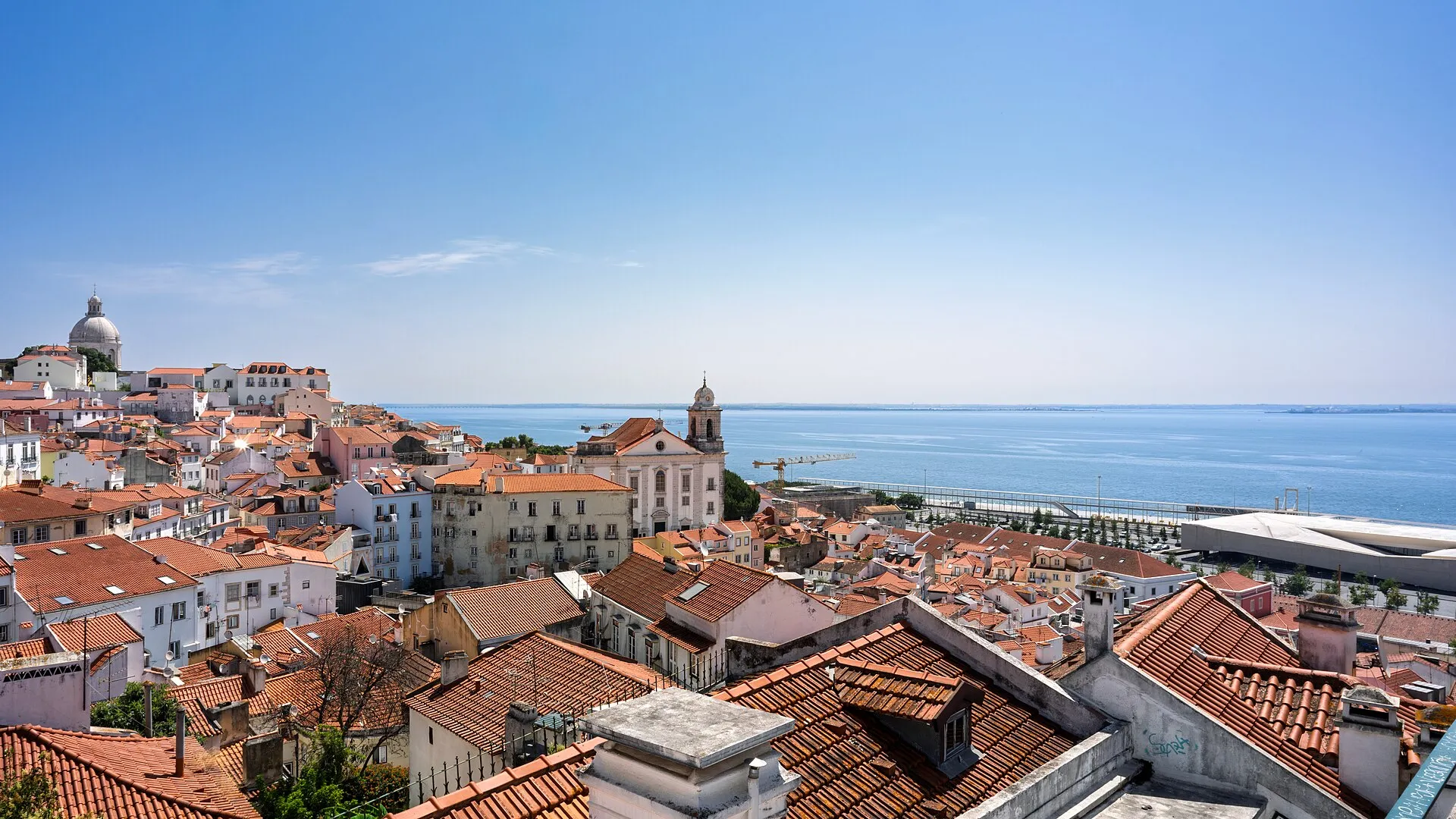
Few cruise arrivals beat sailing up the Tagus into Lisbon at dawn, under the 25 de Abril bridge and past Belém. Better still, the main terminal sits at the foot of the Alfama, so the city's oldest quarter is a ten-minute walk from the gangway.
Destination Traveller editors · 7 min read · 20 November 2026
- Lisbon
- Portugal
The short answer
From the main terminal, walk. Climb through the Alfama to Castelo de São Jorge for the view, drop down to Praça do Comércio and the Baixa for lunch, then take a tram or taxi out to Belém for the monastery and a custard tart. If your ship docks at Alcântara, start with Belém, which is closer, and work back east.
Where ships dock
Most large ships use the Lisbon Cruise Terminal at Jardim do Tabaco, beside Santa Apolónia station on the eastern edge of the old town. When it is full, ships berth at the older quays of Alcântara and Rocha Conde de Óbidos, just under 3km to the west, below the 25 de Abril bridge. Check your daily programme the night before: it changes how you plan the day.
Getting into town
From Jardim do Tabaco, the Alfama begins across the road and Praça do Comércio is about a kilometre along the river. From Alcântara, take your line's shuttle, a taxi or tram 15E along the waterfront. Lisbon's hills are the real obstacle: the old trams, three funiculars and the Santa Justa lift do the climbing for you, and taxis and ride-hailing apps are cheap by northern European standards.
A day ashore
Castelo de São Jorge. The hilltop castle has been fort, royal palace and barracks; today its walls, towers and gardens give the best view over the red roofs to the river. Go early, before the coach groups.
The Alfama. Lisbon's oldest quarter survived the 1755 earthquake largely intact, so its alleys still follow a medieval plan. Get lost on purpose, then find the viewpoints at Santa Luzia and Portas do Sol.
Praça do Comércio and the Baixa. The grand riverside square opens through an arch into the Baixa, rebuilt on a neat grid after the earthquake. Rua Augusta is the main walking street.
Belém. Twenty minutes west, the Jerónimos Monastery and the Belém Tower are both UNESCO-listed monuments to Portugal's age of discovery. Queue for warm pastéis de Belém at the bakery that has made them since 1837.
Eating and drinking
Lunch on grilled sardines in summer, bacalhau any time of year, or a bifana, a pork sandwich eaten standing at the counter. In the Alfama, small tascas serve fixed-price lunches; in the evening, fado houses pair dinner with Portugal's melancholy song. Finish with a glass of ginjinha, a sour-cherry liqueur sold by the shot from tiny bars around Rossio.
How to plan your day
Half a day. From Jardim do Tabaco, climb through the Alfama to the Miradouro de Santa Luzia, carry on up to the castle, then walk down through the Baixa to Praça do Comércio. Stop for a pastel de nata on the way back to the ship.
A full day. Do the walk above in the morning, then take a taxi or tram 15E west to Belém. Spend the afternoon at the Jerónimos Monastery, walk along the river to the Monument to the Discoveries and the Belém Tower, and queue for custard tarts at the original bakery before heading back.
Beyond the city. Sintra, a UNESCO-listed hill town of fairy-tale palaces, is about 40 minutes by train from Rossio station, or a ship's excursion. The Pena Palace and the Moorish Castle are its highlights; go early, as queues build quickly.
Shore excursions or independent?
Lisbon itself is made for independent exploring, especially from the main terminal. Trams, funiculars and taxis are cheap, and most sights are within a couple of kilometres of the ship. A tour is worth it for Sintra and Cascais together, which are awkward to combine by public transport in a single cruise day, or if hills and cobbles are hard for you.
More to see
LX Factory. A converted industrial complex under the 25 de Abril bridge, now full of bookshops, design stores, cafés and street art. Handy if your ship docks at Alcântara.
The Gulbenkian. One of Europe's finest private collections, from Egyptian antiquities to Lalique jewellery, set in peaceful gardens north of the centre.
The National Tile Museum. In a former convent just east of Santa Apolónia, it tells the story of azulejos, the painted tiles that cover so many of Lisbon's façades. It is one of the closest major sights to the cruise terminal and often overlooked.
MAAT. The Museum of Art, Architecture and Technology, in Belém, has a sweeping white riverside building with a walkable roof and fine views of the bridge.
Time Out Market. In the old Mercado da Ribeira at Cais do Sodré, dozens of stalls run by well-known Lisbon chefs make it easy to try several dishes at one sitting.
Where to stay before or after a cruise
For a cruise starting or ending in Lisbon, the Baixa and Chiado are the most convenient bases: central, flat by Lisbon standards and close to the terminal. The Alfama has small guesthouses with river views but steep, narrow streets that are hard with luggage. Príncipe Real and Avenida da Liberdade suit a quieter, more upmarket stay.
Practical tips
Tickets. A Viva Viagem card, loaded with credit, works on the metro, buses, trams and funiculars. Single fares bought on board trams cost more.
Money. Portugal uses the euro. Cards are accepted almost everywhere, but small cafés and tascas may prefer cash.
Accessibility. The Baixa is flat; almost everywhere else is steep. The Santa Justa lift and the funiculars help, and taxis are the easiest option for anyone with limited mobility.
Opening days. Many museums and monuments in Lisbon close on Mondays, including the Jerónimos Monastery. Check before planning a Monday call around them.
The catch
The hills and polished limestone pavements are tiring and slippery in the wet. Tram 28 is charming but packed and a favourite of pickpockets; ride it early or walk the route instead. On busy days three or four ships can be in port at once.
When to go
Spring and autumn are ideal, warm enough for lunch outside without the heat of July and August. June brings the festival of Santo António, when the Alfama fills with grilled sardines and street parties.
Questions
Can you walk into Lisbon from the cruise port?
Yes, from the main Lisbon Cruise Terminal at Jardim do Tabaco. The Alfama is directly behind it and Praça do Comércio and the Baixa are about 10 minutes on foot.
What if my ship docks at Alcântara?
Alcântara and Rocha Conde de Óbidos are just under 3km west of the centre. Most lines run a shuttle; taxis and the tram along the waterfront are the alternatives.
Are there beaches near Lisbon cruise port?
Not within walking distance. Carcavelos, a long surf beach, is around 45 minutes by train or car, and Costa da Caparica is across the river.
How far is Lisbon airport from the cruise port?
About 8km, roughly 20 minutes by taxi; the metro also links the airport with Santa Apolónia station next to the terminal.
How long do you need in Lisbon on a cruise?
A single day is enough for the Alfama, the castle, the Baixa and Belém if you start early. With an overnight call, add Sintra or an evening of fado.
Is Sintra possible on a Lisbon cruise stop?
Yes, with a full day. Trains from Rossio take about 40 minutes, but queues for the palaces are long, so a ship's excursion or timed tickets booked in advance are wise.
Which tram goes from Lisbon cruise port to Belém?
Tram 15E runs west along the river from Praça da Figueira and Praça do Comércio to Belém. From Alcântara it is a short ride.
Last updated 20 November 2026
Read next
Speak to a specialist
Plan it with someone who has been

Iglu Cruise
Ocean and river cruise deals from every major line
- Ocean cruises
- River cruises
- Luxury cruise lines
See profile →

Bolsover Cruise Club
Cruise specialists with extra value on every booking
- Ocean cruises
- Ex-UK sailings
- Fly-cruises
See profile →

Abercrombie & Kent
Luxury travel and small-group journeys since 1962
- Safari
- Small-group journeys
- Private tailor-made travel
See profile →
The Sunday Postcard
One considered email each week: a trip, a hotel and a route worth your time.